Friday, November 9, 2018

On Learning to Journal Your Dissertation Journey: From Chaos to Completion

I’ve never found a physical planner I like that was completely functional. One Drive calendars are helpful, and I do use it to set reminders and schedule meetings and social engagements. I have a blog and a journal which I keep up with sporadically. Then a friend of mine in the Audiology department showed me her bullet journal. It’s a combination of a journal, planner, and to-do list, which you can customize to fit your academic and personal preferences and needs. I was a little overwhelmed so I immediately, of course, researched the idea. Perfect Pinterest and Instagram pictures popped up everywhere and I thought, “Ain’t nobody got time for that. I’m a terrible drawer.” I was determined to figure it out and find a system of organization that worked for me. I first had to buy myself the essentials to get started. Grad students don’t have a ton of expendable cash and so I read about products that bullet journal enthusiasts loved and recommended.
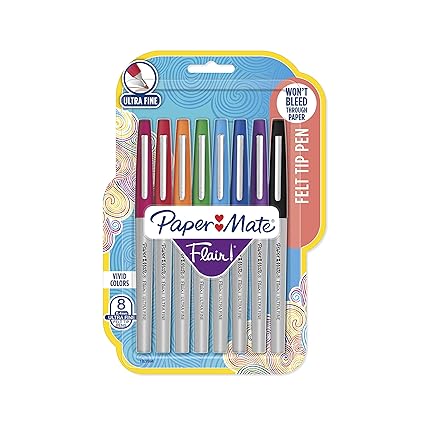
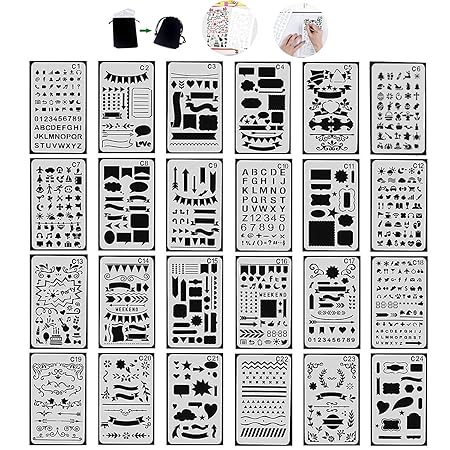
My kit included stencils, a dot grid essentials notebook (dot matrix, not ruled), stencils, a 6” ruler, and Paper Mate ultra-fine markers. I began by making of list of dissertation ideas as a brainstorming exercise to help me narrow down a topic. I then moved on to a dissertation timeline with actual dates and a dissertation completion guideline with intended dates. I wrote an outline for my prospectus, notes on all three drafts of the prospectus from my committee, pre and post proposal defense notes, outlines for each dissertation chapter, notes on feedback for each chapter, a list of sources, key search terms, a list of possible journals to send my dissertation chapters to, blog journal entry ideas to share research, goals, quotes, reading list, monthly calendars, weekly calendars, library book return list, a monthly budget, and a list of grants and fellowships to apply to related to my research. 
Even more importantly though, a bullet journal can be used to remind you of self-care. I've got a self-care checklist, a list of my favorite movies and albums to listen to for inspiration during downtime, a gratitude list, a list of my favorite teas, a list of things I love about myself, and a list of positive feedback on my work. We all need these reminders when we feel like we're not getting enough work done quickly enough and well enough. 
It would be easy to create an excel or word document for each of these tasks, but there are several benefits to taking time each day to make entries into your bullet journal. You can easily visualize and track progress, vent about frustrations (personal or professional), hold yourself accountable, keep track of everything in one place, and most importantly foster creativity. When I sit down to write in my bullet journal it's a reflection upon the day and my work. It’s a much-needed break for some me time which gives me a sense of calm because I feel I have my act together and know what I’ve got to get done and where I’ve got to be each day. I enter information into my online calendar and journal too, but until I’ve written it down, I feel as though all my tasks and responsibilities are floating around in my head and it makes me anxious. Pictures and links to products below. I hope you all find this information encouraging and helpful!

- Tiffany 
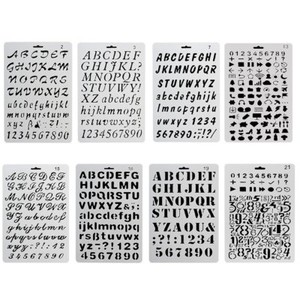


Image result for cocode bullet journal stencils
Image result for janyun bullet journal stencils
Stencils
Image result for paper mate flair .4 mm
Paper Mate Flair
Essentials Dot Matrix Notebook, A5 size (Bullet Journal)
Essentials dot grid notebook small
Esstentials Dot Matrix Notebook, Extra Large, A4 Size - (Hardcover)
Essentials dot grid notebook large 
Leuchtturm Hardcover Medium A5 Dotted Notebook Royal Blue
Leuchtturm notebook small (different colors)
Markers do bleed through the page. 

Friday, October 19, 2018

The Alt-Ac Decision (for PhDs)

by Robyn Byrd

Whether you have fallen out of love with your specific field, or have simply realized you don't want to spend your life at a university (darn kids everywhere!), there may come a time when you consider the alt-ac path. That is, looking for a job outside of universities, and maybe even outside of research. This might seem frightening and even disappointing to even consider, after years of work and best laid plans for the future.

Yet in this economy, a job that is a lucrative alternative to an academic career (hence, alt-ac) may be a prudent plan. I myself have considered looking for alt-ac work, probably for a temporary bridge between the doctorate and a tenure-track teaching position. After a decade of low-wages and part-time work, I am ready for a "grown-up" salary! But then I have to consider... how could this break with university culture and work affect a future prospective tenure-track opportunity? Woe is me! This is hard.

First, some things to consider about alt-ac:

Is alt-ac your long term plan? Are you ready to get out for good? Motivated by pay? Go for it. Your track record of project-management, working with teams (your committee), and stick-tuitiveness (not to mention your intelligence) make you a great catch for the corporate world.

Is this a temporary bridge plan, because of the poor academic job market? Do your research. Do the types of universities you wish to court consider alt-ac work to be a lowly thing or a shirking of your nobler projects? Or do they understand, as a community college or state school might, that financial pressures put people to work at all sorts of things? Seek a job that gives you experiences that could leverage you back into a highly-sought research/teaching position. Or even aim for an administrative role that would not have been open to you as a "merely" academic Ph.D.

Do you want to leave the university, but hate the idea of the corporate world? Research options in non-profit work, consultancy, and government offices. Depending on your credentials, you could work for a state-run food bank, a local housing authority, a non-profit counseling and psychiatry firm, or even the U.S. Geological Survey (there's an office right up the road from DeKalb...). Some of these positions would not pay as well as the corporate world, but they would allow you to continue your research and problem-solving in impactful ways, perhaps even more impactful than the classroom.

Are you looking for a job the way a normal person would? This isn't the academic job market! Reformat your CV as a resume. Seek out workshops now on how to maximize your LinkedIn presence. LinkedIn employers frequently contact people like us for non-academic work.

These are just a few problems and questions that have been on my mind, and a few ideas for where scientists, teachers, psychologists, and all manner of doctorate holders could find work outside of the familiar, yet sometimes growth inhibiting, landscape of the college campus. Good luck in your search! The Ph.D. may narrow your opportunities in some ways, but the payoff is in the specific and rewarding opportunities it opens up.

Friday, October 5, 2018

Working 9-5

If you’re anything like me part of the reason you chose academia is to avoid the 9-5 grind. Academics generally seem to harbor a slight distaste for the corporate world. We certainly didn’t get into academia because we’re interested in making money. For this reason, unless you’re a graduate student in Business, you likely don’t approach your Thesis or Dissertation project like a CEO managing time, resources (human and material), and tasks. As a Liberal Arts student, I like to view my Dissertation as an artistic endeavor. I’m not a structured individual. I’ve always observed that academics have no sense of time. Time exists as a continuum or a social construct. However, waiting for the Muse to strike you with the inspiration you need to make timely progress toward your Thesis or Dissertation is not a strategy for success. Prior to this point in your academic career, your work has been structured for you by professors, who set due dates and class schedules via syllabi.

By the time you’ve reached the Thesis or Dissertation stage, you’re working independently with direction from your committee, but your chair will not be setting deadlines for you and e-mailing you for submission. You and your committee have outlined a tentative schedule for completion, which will change, but it’s your own responsibility to keep yourself on task as an emerging scholar. As you begin to structure your Thesis or Dissertation project, it’s likely you’ll feel uncertain about how to begin. You’ll experience uncertainty at every stage of the process and this is very beneficial personally, professionally and intellectually, but can also be overwhelming. Creating a schedule for yourself, structuring your time, will help to combat the confusion and give you a feeling of confidence, amidst the uncertainty. This will also allow you to manage tasks much more easily by setting yourself daily, weekly, and monthly goals. You’ll be forced to segment your work into manageable tasks and this will give you a feeling of accomplishment.


Measuring actual progress toward the ultimate end goal (graduation) becomes much easier. Setting hours for yourself ensures you are less susceptible to burnout and overwork and more likely to complete your Thesis or Dissertation and enjoy the process. Most importantly, a schedule is a contract you make with yourself, motivating you to continue. Motivation rather than inspiration leads to completion. Drafting a schedule is the initial step toward taking responsibility and ownership of your own work. Some days, you’ll sleep in too late. Some days you’ll have a doctor’s appointment. Some days your cat will sit on your keyboard and delete a chapter. Some days you’ll accidentally binge Parks and Rec for 10 hours. Some days you’ll fail and not get even 5 minutes of your allotted 4-8 hours of work done. Begin again the next day. Most days you’ll succeed.
Related image

- Tiffany 
Friday, September 21, 2018

Bibliographic Hygiene: Keeping Your References in Ship Shape


The last thing that is on your mind when you are drafting your thesis is probably your references pages. You know your sources, you might even know their authors by name. But when it comes to making that list of documents at the back of your paper, we need to make it with the idea that... someone else may have to find those documents someday!

APA, MLA, and various other disciplines have styles that help us point out the most relevant features of our sources. "Who wrote it?" is most important to the humanities.  "When was it written?" more important in the sciences.  But when we do our bibliographic work we still need to make decisions sometimes, about what to put where, and what information is really needed.

Your references should serve the reader – they should dish up every source in your document in an easily searchable format and contain all the information the reader may need to find the sources. In the 21st century this is probably a more complex process than ever. Even though we can Google up a storm, multi-media sources can be hard to track down. And despite our modern search engine powers, looking for obscure documents, dissertations from other countries, or a journal by the same name as another journal, can lead to bibliographic snarls!

Cases in point: Our office recently had to untangle a source snarl for a client’s references page. And I have dealt with this myself, trying to track down a master’s thesis I needed to read.

A student reached out to us because she had finished her anthropology thesis but was at a loss for how to cite some unpublished letters (to and from Edward Ayer, a major benefactor to the Field Museum and Newberry Library). She had found the papers unsorted in an archive. Literally found them in a box! She was a lucky researcher, because she had been looking for the letters based on a faulty citation. So, it was up to her to fix this paper trail. Carolyn recommended citing the letters under only Ayer’s name, even though he was not the author of all of them. Her reasoning:
Edward Ayer

 “It appeared to me that the correspondence was held in a single archive of Ayer correspondence and that what the reader needs is direction to the archive, not citation to individual pieces. The principle in my editing is to document with the clearest path of recoverability, so that everything on the reference list is accessible in a clear location, whether a book, journal, or website, or in this case an archive of correspondence.

So, in this case, the other author’s names would not be of any help. The student needed to cite them under the name of the archive they were found in – the only way for another researcher to find them until they are published.

My own problem required a 21st century solution. I just simply couldn’t find the thesis I wanted to read, and it wouldn’t show up in ProQuest or anywhere else, not even at the university where it was written. What was I doing wrong? …The one source I had that referred to the thesis had mis-typed the title. It was a plain enough title, and the author’s name was a common enough name, that I was on a wild goose chase until I decided to chase a different bird – I took to Twitter!

I found the graduate's Twitter account based on his bio, apologized for the bother, and timidly asked in his mentions (so that others might see)… can you send me your thesis? He was happy to oblige. It took a while to dig it up, but getting another citation was worth it I suppose. Now I can cite it as an unpublished thesis, with the correct title, and hope that the next person who wants to read about Northumbrian dialects can easily find the little gem I’d tracked down.

Bibliography is partly about giving credit to the scholars whose research we couldn’t do our own research without. It is also about keeping track of when and where research was done, for that is relevant information in many disciplines. But none of that matters if we don’t give our readers the right bibliographic clues to find those same sources. We’re not just referencing our sources to cover our own butts or to show our research areas. We’re doing it so that research can continue in our fields, even when we’re not around to explain our sometimes cryptic sign-posts. Theses and dissertations are rarely the end-all-be-all on a topic. Let’s leave nicely legible markers along our paths so that others might follow, and even surpass the milestones we’ve made.


Friday, September 7, 2018

Presentations, Brown Bags, and Workshops, oh my!

Presentations, Brown Bags, and Workshops, oh my!  

            We here in the Thesis and Dissertation Office are very busy working on presentations and Brown Bag discussions for the month of October to help keep thesis writers and dissertators informed, on track, and motivated. On October 2nd from 2-4 pm in Adams 103, we will be offering a Dissertation Essentials presentation that benefits all dissertators no matter what field. If you are enrolled in 799 next semester or are looking to enroll next semester, come get guidance on the most daunting aspects of the dissertation process. 


            October 3rd same time, same place, we’ll be hosting the same presentation specifically for thesis writers enrolled or enrolling in 699. October 4th from 6 – 8 pm in Founders Memorial Library, room 297, we’ll be discussing the submission process with ProQuest, the very last step before graduation. Then, on Oct. 6th at the NIU Naperville campus room 166, from 9 am – 2pm we’ll be giving a seminar for those of you writing a dissertation in Education. There will be plenty of time for one-on-one inquiries as well. October 8th from 2 – 4 pm in Adams Hall 103 we’ll explain formatting tables, figures and pagination. This can be tricky no matter how familiar you are with MS Word so make it easy on yourself by attending. October 17th 12 pm – 1 pm Adams Hall 103, come and discuss issues with Writer’s Block and how to overcome it. If you experience anxiety staring at a blank MS Word document this is a must. There isn’t a thesis or dissertation writer who doesn’t experience this stumbling block so come get advice from peers and the experienced writers in the office on how to work through it and come out better on the other side.


Finally, for many of us the proposal, and just understanding how and where to begin, is the biggest obstacle to the thesis/dissertation journey. On Oct. 24 from 12 – 1 pm in Adams 103 come talk with us about putting a proposal together, from formatting to narrowing down a workable research topic. No matter how many papers you’ve written, the proposal is a unique genre and you probably have questions.


To register for any of these events, please send a request e-mail to thesis@niu.edu and include the name of the event in the subject line. For more information, visit the Thesis and Dissertation Office website at  https://www.niu.edu/grad/thesis/workshops-support.shtml.  


Friday, August 24, 2018

First-Generation Scholars at NIU

by Robyn Byrd

NIU is hosting a series of talks and events this September designed to welcome first-generation college students to the university. But these events are not just for undergrads -- all are welcome, and especially first-gen alumni, faculty, and staff.

I plan to attend because as a first-generation college student and subsequently a first-generation scholar (i.e. doctoral student), a path which comes with its own set of confusing and unique "firsts."

Events will be taking place in Founders Memorial Library:

Tues Sept 4, 4-6pm

Wed Sept 5, 11am-1pm

As a former teacher of freshman composition at NIU, I met students from varied economic backgrounds. The more privileged of those students, whose parents either have degrees or can easily pay for their children's degrees, don't have a lot of insight into how first-gen students live. Nor do some professors who teach first-gen students. At NIU, many teachers and programs try to acknowledge the troubles of these young people -- struggling to find time to do both school work and "work work," struggling to focus because this all makes them so tired, and perhaps even more tired because they haven't had a good meal in a week. (We even have an on-campus food pantry for this reason.) I understand these struggles particularly well, as I was a first-gen student myself; and years later, I'm still struggling to make ends meet while writing my dissertation.

The first-gen undergraduate student has been the subject of study and of university re-focus for a couple of decades now, and more of those students are now making their way into the academy. First-gen academics, on the other hand, are less common, and therefore less supported by university programs, counselors, and financial aid. Of course universities can train faculty to welcome fresh faced first-timers right out of high school! But what does a graduate professor do with a roomful of students of varied economic and educational backgrounds?

At the graduate level there is quite a bit of assumption on the part of those firmly lodged in the academy about what people already know. Our privileged peers have had much more time to read and travel, and they have had parents to show them what to read and where to go. Furthermore, there is almost no consideration on the part of faculty of whether grad students know how to walk the walk. Not intellectually speaking, but when it comes to scheduling, networking, obtaining data or materials, writing a proposal, and so on. These are skills acquired through trial by fire if you are a first-gen grad student. Your parents didn't know what you were doing as an undergrad. By now you might as well be working on astrophysics in an alien language. No one in your circle can help you, and most professors don't seem like the ones to ask. And as for troubles outside of coursework and writing, you had no idea what you were getting into when it comes to the
psychic and emotional weight of a grad degree.

This is why I'm excited about the First Generation events at NIU! In addition to the solidarity that we have already engendered among first-gen undergrads, I want to see that same solidarity at work among grad students, in faculty-student relationships, and so on. First-gen academics do have folks to turn to - other first-gen grads at the same campus. And while those mentors may be few and far between as of today, we will certainly see more and more of them in years to come.

Friday, August 10, 2018

Hello From Your New Blogger and Fellow Dissertator!

by Tiffany Messick
Tiffany at work
I’m a transplant from Austin, TX. This month I’m beginning my fifth year as a PhD student in the English Department. I put my committee together in February and recently defended my proposal at the end of June. I’m currently half way through a first draft of my first chapter. I’ve taught FYCOMP for four years and absolutely loved it but now I am here to help other dissertation writers make progress. I can answer big existential content questions but am also great with MS Word formatting. My concentration is 20th Century American Literature, specifically Southern authors (Walker Percy, Zora Neale Hurston, Carson McCullers, and Richard Wright). I like to complicate matters for myself by choosing topics which are interdisciplinary, which is how I landed on Cartesian dualism and the American South. I’m often in libraries or coffee shops dissertating.

Bowie at work
When I’m not twisting my brain into a pretzel, I love to watch classic movies like my favorite, A Streetcar Named Desire, and listen to music. I’m a bit of a rock music encyclopedia. Test me sometime! I have two wiener dogs, Vienna (Sausage) and Bowie, who are very cute and very spoiled. I also like to read (obviously) philosophy. Camus, Nietzsche, Sartre… are a few of my favorites. Eventually I hope to become a professor of literature at a university somewhere. I earned my Bachelor’s in English at the University of Texas. Hook ‘Em! For my MA I studied at Northwestern State University of Louisiana. I love to write and I’m sure my enthusiasm for writing will rub off on you to make the seemingly endless dissertation process easier. I’m addicted to watching history programs on PBS and National Geographic and true crime on Investigation Discovery.

The biggest struggle I’ve encountered writing the dissertation has been being away from my support group back in Texas. Graduate School, especially the dissertation process, can be very isolating. Come talk to me about any obstacles you might be facing and how to tackle them.